
AC Hampton’s Viral Vegas Story Explores Wealth and Self-Control

- AC Hampton recounts a lesson in financial discipline from a Las Vegas blackjack encounter.
- Wealth, according to a $25 blackjack player, is sustained by restraint, not income.
- The story challenges the illusion that wealth is linked with visible consumption and lavish spending.
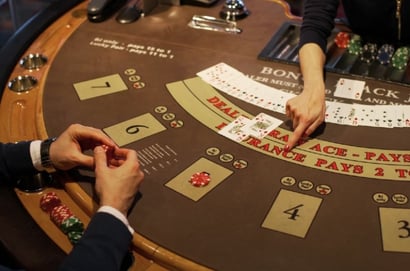
Entrepreneur and marketer AC Hampton recently shared a story on X that struck a chord well beyond the casino floor.
Ego and Psychology
In a reflective post, Hampton recounted an encounter at a Las Vegas blackjack table following a conference. The thread was not about strategy or luck. It was about restraint, ego and the psychology of staying wealthy.
The anecdote unfolded in a setting synonymous with excess. Las Vegas thrives on escalation. Conference delegates spill from keynote speeches into casinos where bets, like ambitions, quickly compound.
It was in that environment that Hampton found himself seated beside an older man whose approach to gambling challenged the surrounding spectacle.
The $25 Player
The man, early sixties, wore a plain polo shirt and displayed none of the markers typically associated with high net worth. While other players were wagering hundreds per hand, he calmly placed $25 chips on the table.
Conversation followed between hands. He told Hampton he owned laundromats. Forty of them across Arizona and New Mexico.
A quick estimate suggested substantial wealth, potentially more than $30m in assets. Yet his bet size remained unchanged.
When Hampton asked why he played so conservatively, the answer revealed the deeper story.
A Brother’s $2m Night
The laundromat owner described his brother as the more naturally gifted sibling. Stronger business instincts. Greater charisma. Bigger appetite for risk.
That brother built and sold a real estate company for $8m. Within three years, the money was gone. Gambling, cars and women eroded the proceeds. One night at a similar blackjack table, he lost $2m.
Today, he works at Home Depot.
The contrast was stark.
“I only bet what I’d be fine setting on fire. $25 is entertainment. $500 is ego,” the man told Hampton.
The distinction reframed gambling as discretionary spending rather than identity reinforcement. For him, escalation was not entertainment. It was vulnerability.
Controlling the Feeling
The most resonant line in Hampton’s tweet focused on psychology.
“Poor people and rich people chase the same feeling. That hit of ‘I’m winning.’ The difference is poor people let the feeling control them, while rich people control when they feel it.”
The observation was not framed as moral superiority. It was presented as behavioural discipline.
According to the man, the wealthiest individuals he knew were often the least flamboyant. Their excitement came from watching their accounts grow steadily, not from dramatic gestures designed to provoke reaction.
He cashed out less than $400 that evening. Over 20 years of visiting the same casino, he said he had never lost more than $1,000 on a single trip.
His brother, by contrast, lost everything in one night chasing intensity.
Beyond the Casino
Hampton’s reflection extended beyond blackjack. Sitting at the table, he began questioning his own habits. What do people spend when feeling low? What do they chase when they want to feel like they are winning?
The story resonated because it dismantled a common assumption. Wealth is often associated with visible consumption. The laundromat owner suggested the opposite. Staying rich depends less on income and more on boundaries.
In a city engineered to magnify impulse, the quiet discipline of a $25 chip may represent the more durable strategy.